Sumo Joy!
These sweet giants bring me fond memories of childhood.

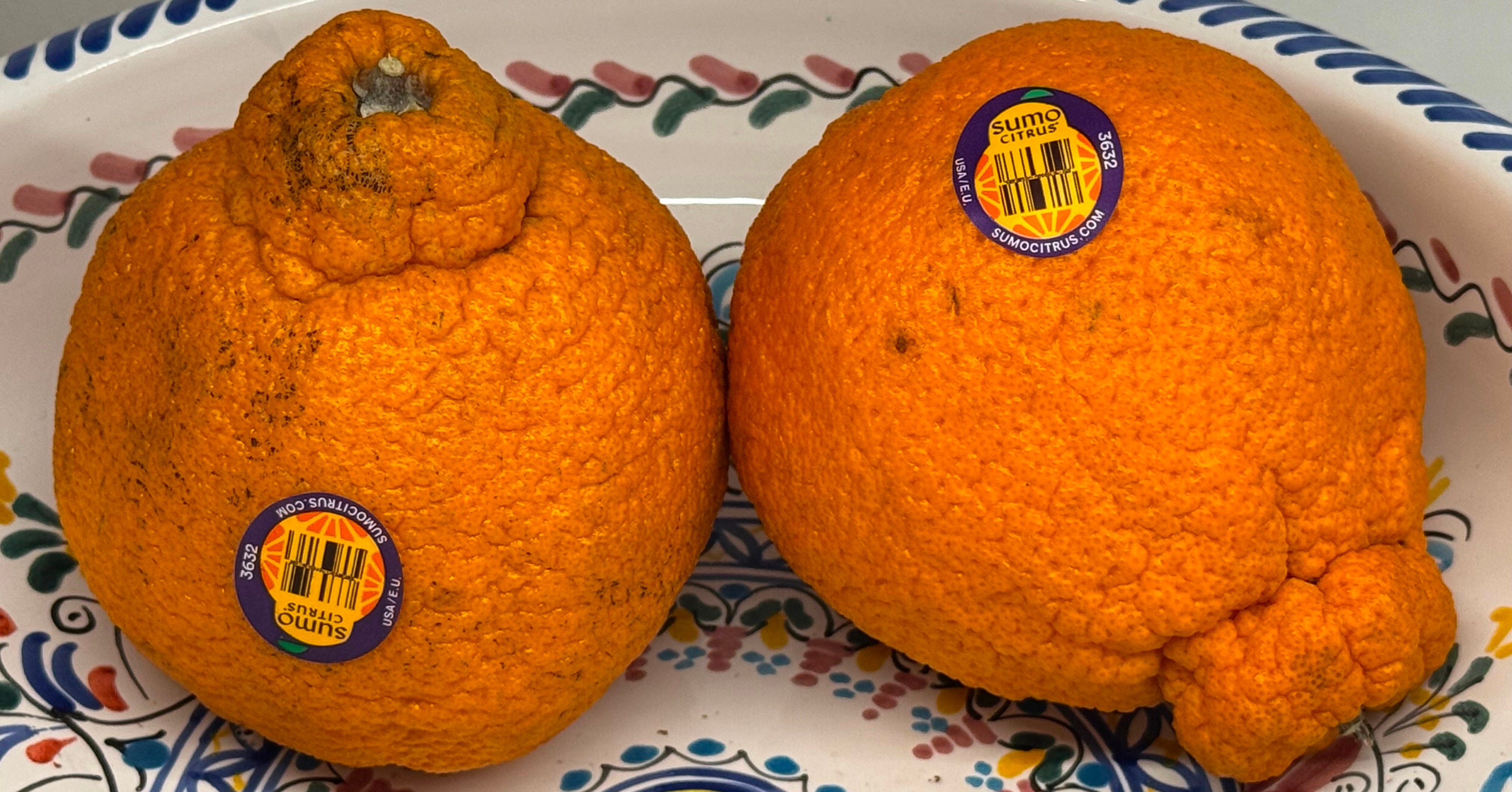
They are seedless, easy to peel and sweet, sweet, sweet. Dekopons or Sumo Citrus as they are called in the US, were developed in Japan in 1972 as a hybrid of the Kiyomi and ponkan varieties. The ponkan variety also called Chinese Honey Orange, aptly, is itself a hybrid of mandarin orange and pomelo. Ponkans will feature later in this story.
The Sumos pictured weigh about 12 ounces minus the peel and come in at 210 calories with 50 grams of carbohydrates. On the plus side they supply 4.2 grams of dietary fiber which is more than 10% of the recommended daily intake. This gives them a glycemic index of 42 to 47 which is considered low, ie below 55 thus makes them appropriate for people minding sugar consumption. They are a great source of Vitamin C; 2X the recommended daily amount. I can’t imagine a better fruit for sharing with a friend.
My grandkids love tearing off its “nose”, which is what they call the knobby part where the stem used to be.
I have fond memories of eating a related citrus as a boy in Brazil back in the 1960s. They were sweet, easy to peel but had seeds. My mother would buy them from Japanese fruit vendors in the Central Market (mercado Central) in Goiânia where she would go several times per week. In Brazil they were known as ponkan tangerines (mexerica poncã) and were grown by Japanese immigrants.
In those days, before supermarkets took over, the Central Market offered a substantial variety of products (for the time) in shops owned by competing merchants. On Saturdays, the market would close at noontime. I remember being very anxious one such Saturday, as announcements were read over the public address system that the market would soon close. Busy with her shopping, my mother seemed oblivious to all the calls to exit the market. My infantile imagination leapt to visions of being locked in the market for the whole weekend without any toys! Yet, by the time we got home all was forgotten as I looked forward to eating one of those ponkan citruses she had bought.
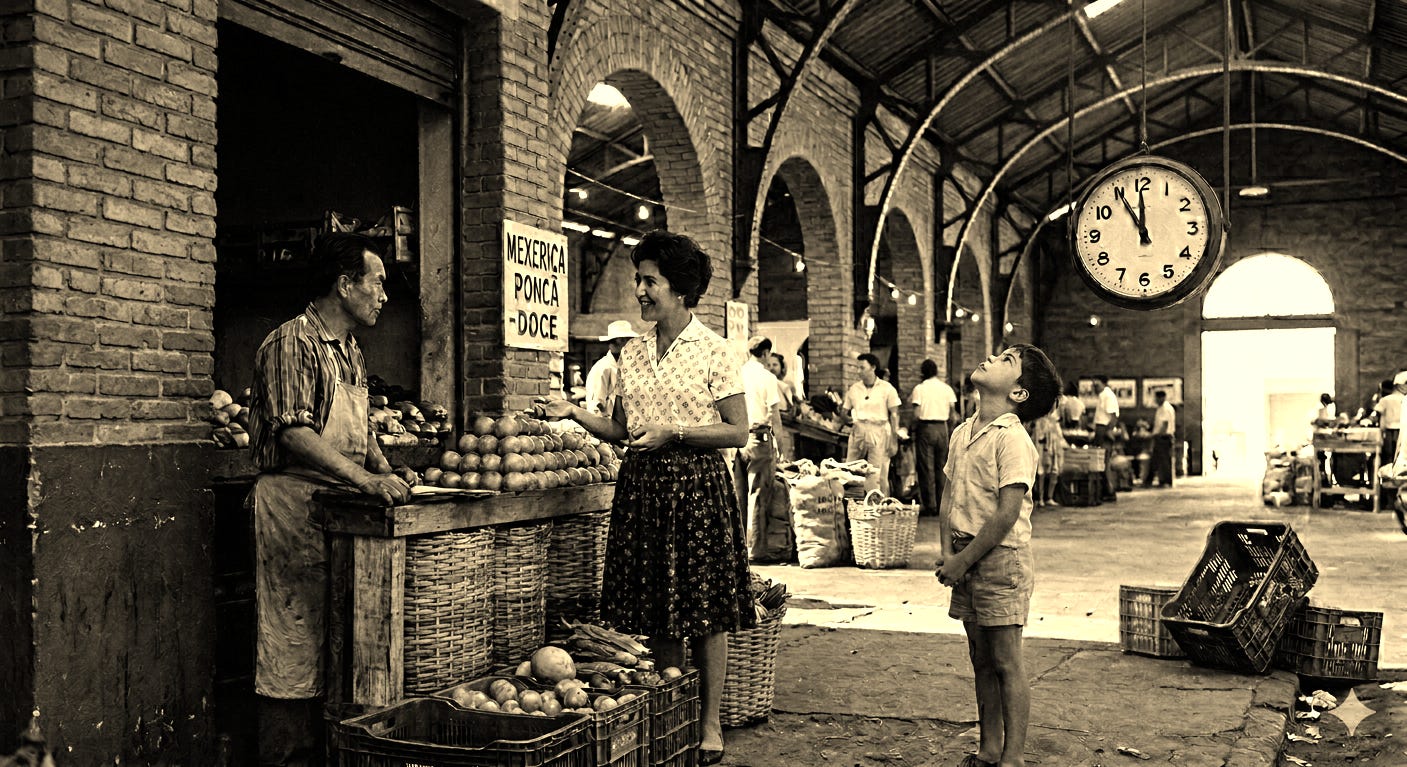
The image above is Nano Banana 2’s idea of the scene after copious prompting on my part. The woman does not look like my mother and the boy does not look like me, but he is expressing the anxiety I felt about the noontime closing.
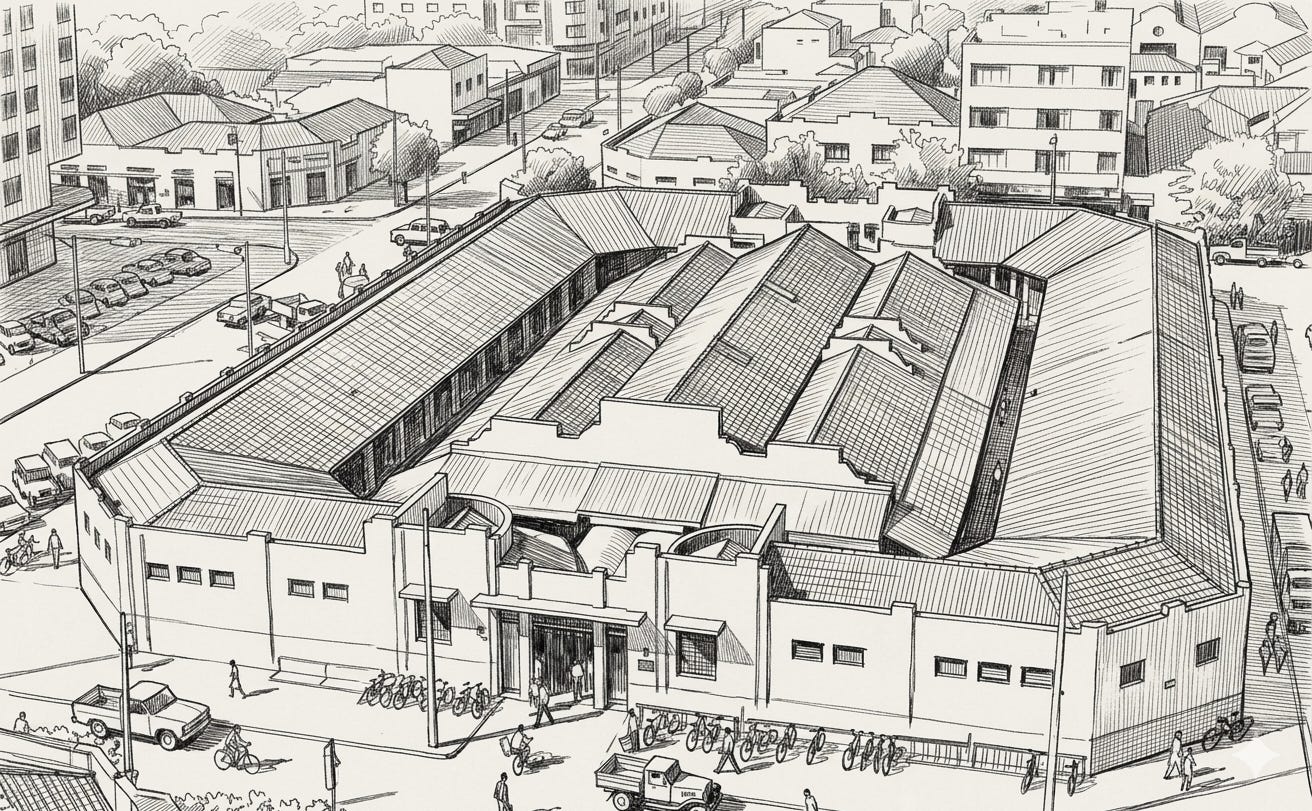
The actual old Central Market looked like this. The inward focused structure was, nonetheless, an interesting and pleasant place full of customers and vendors. A modern developer would have used the outer walls for display windows. Instead the windows here served to let in air and a bit of light. Perhaps the design was driven by safety concerns. There was a lot of petty crime in those days.